
How it grows, why it spreads, how it is removed, and the questions we get asked most.
The canes are the part you can see. The real challenge is the network of underground stems called rhizomes.
Rhizomes spread outwards from the plant, sometimes travelling well beyond the visible canes. They can cross garden boundaries, appear in neighbouring gardens and push their way into areas where you really don’t want them.
What looks like one bamboo plant can be a much bigger problem underneath.
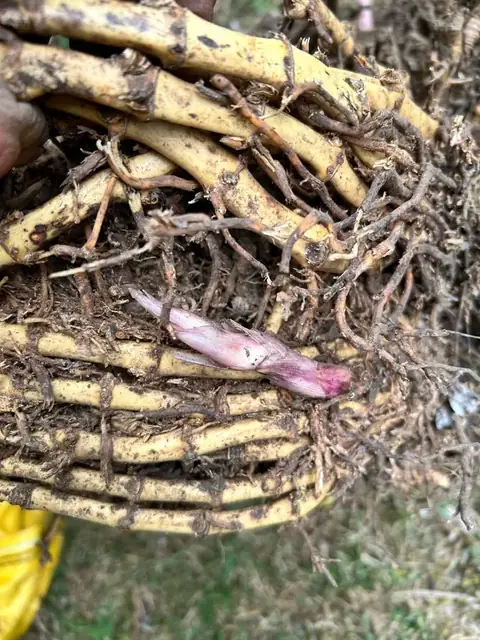
Bamboo is a grass, not a tree. It spreads through underground stems called rhizomes, which can extend far beyond the canes you can see. That is how it turns up on the other side of a fence, under a patio or in a neighbour’s lawn.
The rhizomes run well beyond the visible clump, and they can push through hard surfaces such as patios and concrete slabs.
Rhizomes can stay dormant for years and then resurge, which is why cutting the canes down does nothing on its own.
Cutting the canes may make the garden look clear, but it doesn’t remove the plant.
The rhizomes remain underground and can continue producing new growth. That’s why bamboo that has been repeatedly cut down can keep coming back year after year.
To properly remove established bamboo, you need to deal with what’s happening below ground, not just what’s above it.
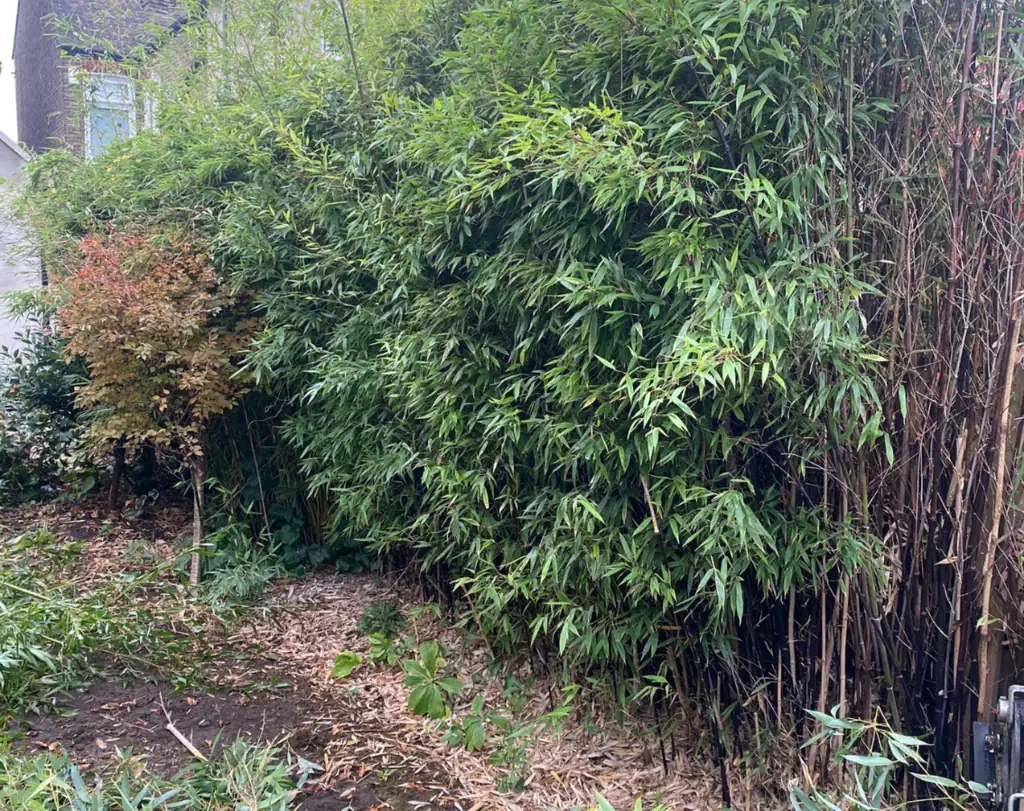
Book a free survey. We will look at what is growing and where it is heading, and tell you what it needs.
A bamboo plant isn’t necessarily a problem simply because it is bamboo. The trouble starts when it is allowed to spread beyond where it was intended to grow.
It can become difficult to control when it reaches:
If bamboo has started appearing somewhere it shouldn’t, the earlier it is dealt with, the easier the job can be.
Bamboo may look attractive, but certain types can spread aggressively and become difficult and expensive to control.
Research commissioned by Environet found that 8% of UK homes have bamboo growing on the property, with a further 3% adjoining a property affected by bamboo.
The problems generally fall into three areas:
Bamboo spreads through underground rhizomes, which can travel several metres from the original plant. They can exploit cracks and gaps in patios, driveways and other structures, and can enter drainage systems.
When bamboo spreads across a property boundary and causes damage or unreasonable interference, it can lead to neighbour disputes and potentially legal action. Professional reports can help establish the extent and source of the infestation.
Bamboo can raise concerns for potential buyers, particularly when it has spread beyond its original planting area. This can lead to surveys, price negotiations and requests for professional removal before a sale.
The right solution depends on the variety, how far it has spread and what is around it. That’s what the free survey is for.
Digging out the bamboo and the underground rhizome network using a mini digger fitted with a ripper tooth. The most thorough option.
Best when the bamboo needs to be removed completely.
Targeted herbicide applied to regrowth, or where excavation isn’t practical, for example against a wall or on a boundary. Carried out by PA1 and PA6 qualified operators.
Best where digging isn’t possible, or as a follow-up treatment.
A physical barrier installed underground to contain bamboo that is staying, or to help prevent it spreading across a boundary.
Best when you want to keep the bamboo, or where the source is on a neighbouring property.
Straight answers to what homeowners ask us most. If yours is not here, call us.
Bamboo is not a tree; it’s a grass. In fact, bamboo includes some of the largest grasses in the world. It is an ancient group of plants, with woody bamboos having evolved millions of years ago.
Some types of bamboo spread through underground stems called rhizomes. These rhizomes can travel well beyond the visible canes and produce new shoots some distance from the original plant.
This is why bamboo can sometimes appear on the other side of a fence, beneath a patio or even in a neighbouring garden.
Bamboo rhizomes can travel several metres from the main plant, particularly in favourable conditions. The RHS reports that some running bamboos can spread more than a metre in a year.
Bamboo shoots are also remarkably strong and can exploit existing cracks and gaps in hard surfaces such as paving and patios. They don’t simply punch through solid concrete or sound foundations; instead, they are more likely to take advantage of existing cracks, gaps and weak points.
Not currently. However, some types, particularly running bamboo, can behave invasively. Their underground rhizomes can spread several metres from the original plant and may spread into neighbouring gardens. The RHS recommends appropriate containment or removal where running bamboo is becoming problematic.
Yes. If any of the underground rhizomes are left behind, bamboo can regrow. That’s why proper removal focuses on dealing with the underground rhizome system, rather than simply cutting down the visible canes.
It can. Bamboo can cause damage where its rhizomes or roots exploit existing cracks, gaps and weaknesses in paving, walls, floors and drainage systems. In some circumstances, this can lead to damage to hard surfaces or structures.
Bamboo can also spread into drainage systems, particularly where pipes, joints or connections are already vulnerable.
Speak to your neighbour first. We can survey the affected area to establish the source and extent of the rhizome spread and provide a detailed written report. Where appropriate, we can remove the bamboo from your side of the boundary and install a root barrier to help prevent further spread.
If damage has occurred or legal action is being considered, we recommend seeking independent legal advice.
It can. Bamboo may be raised during a property survey, particularly where it is close to buildings, has spread beyond its original planting area or crossed a boundary. Buyers, surveyors or solicitors may request further information, removal or a professional report.
We can survey the bamboo and provide a detailed report outlining its extent, our findings and any recommended action.
You can, but removing established bamboo can be difficult. The visible canes are only part of the plant. Bamboo can have an extensive underground rhizome system, and one small rhizome left behind can produce new growth. Professional removal helps ensure the rhizomes are properly dealt with.
There are three main approaches we use: excavation, which removes the visible canes and underground rhizome network; chemical treatment, which can be used in certain situations where excavation isn’t practical or appropriate; and root barrier installation, which allows bamboo to be retained while containing its spread and preventing it from crossing into neighbouring boundaries.
Many jobs use a combination of methods. Our site survey allows us to assess the bamboo and recommend the most appropriate solution for your property.
Where it is the right approach, yes. We may use a targeted herbicide to help prevent bamboo regrowth, particularly where complete physical removal is not practical or feasible.
We are fully PA1 and PA6 qualified for the use of pesticides, so any treatment is carried out safely, responsibly and in accordance with current regulations. Our approach is always to use the most appropriate method for the situation, with chemical treatment used only where necessary.
A root barrier is a physical barrier installed underground to help prevent bamboo rhizomes from travelling beyond a designated area. It is most often installed along a boundary to help prevent bamboo from spreading into a neighbouring garden, or to contain bamboo within an area where you want it to grow.
Every bamboo removal job is different, so the cost depends on factors such as the size and location of the bamboo, how far the rhizomes have spread, access to the site and the amount of excavation required.
We assess each job individually and provide a clear quotation before any work begins.
No. We offer a free, no-obligation site survey. We’ll assess the bamboo, discuss your options and provide a clear quotation for the work required.
Yes. We are fully PA1 and PA6 qualified for the use of pesticides, and fully insured.
Yes. Where bamboo has spread between properties, a professional report can help establish the extent of the spread and, where possible, the likely source.
Reports can also be useful during property sales, where buyers, surveyors or solicitors may require further information about bamboo and its potential spread.
We cover South London and the surrounding areas. However, if you’re unsure whether we cover your location, get in touch and we’ll be happy to confirm.
Is bamboo taking over your garden? Give us a call to discuss the problem. We offer a free, no-obligation on-site survey to assess the bamboo and talk you through the best way forward.